Parent Questions Β· Infant Β· 7β9 Months
By nine months most babies sit steadily, move somehow, crawling, rolling or bottom-shuffling all count, and babble in strings. Suddenly crying at strangers is not spoiling, it is a milestone. This guide covers what to expect, how to encourage movement safely, and the delays that deserve a check rather than waiting.

Pick the worry that fits your baby and open it for a clear answer, with what is usually normal, when to see a doctor, and when to go straight to hospital.
Many babies sit without support, get into sitting, move objects between hands, rake food, bang two objects, look for dropped toys, respond to their name, make repeated sounds and react differently to familiar people and strangers.
By about 9 months many babies sit without support, get into sitting, transfer and rake objects, babble, respond to their name and enjoy peekaboo. Crawling style and timing vary; corrected age matters after premature birth.
The baby cannot hold the head steadily, cannot sit with support near 9 months, uses one side much less, is very stiff or floppy, does not respond to sound or faces, makes few sounds, has feeding-skill difficulty, or loses a skill.
There is a seizure, repeated spasms, sudden unresponsiveness, rapid loss of skills, severe breathing difficulty, blue colour, a serious fall or head injury, suspected shaking, or the baby is difficult to wake.
β What you can do: Talk, play peekaboo, offer safe objects to transfer, and discuss progress at the 9-month visit. Use corrected age if born early.
β Zango Clinic’s view: At 7β9 months, milestones are a pattern of progress, not a competition; loss of any skill deserves prompt assessment.
Crawling varies widely: some babies commando crawl, bottom-shuffle, roll or move later, and some skip classic hands-and-knees crawling. Sitting control, symmetry, strength and ongoing progress are more important than one style.
By about 9 months many babies sit without support, get into sitting, transfer and rake objects, babble, respond to their name and enjoy peekaboo. Crawling style and timing vary; corrected age matters after premature birth.
The baby cannot hold the head steadily, cannot sit with support near 9 months, uses one side much less, is very stiff or floppy, does not respond to sound or faces, makes few sounds, has feeding-skill difficulty, or loses a skill.
There is a seizure, repeated spasms, sudden unresponsiveness, rapid loss of skills, severe breathing difficulty, blue colour, a serious fall or head injury, suspected shaking, or the baby is difficult to wake.
β What you can do: Provide daily floor time and place toys just beyond reach. Seek review for marked stiffness, floppiness, one-sided movement or no sitting support near 9 months.
β Zango Clinic’s view: At 7β9 months, not crawling alone is often normal; unequal movement or no developmental progress is more concerning.
Practise on a firm floor with an adult close by, toys in front and space to use both hands. Pillows may soften a fall but should not trap the face, and raised beds are unsafe practice areas.
By about 9 months many babies sit without support, get into sitting, transfer and rake objects, babble, respond to their name and enjoy peekaboo. Crawling style and timing vary; corrected age matters after premature birth.
The baby cannot hold the head steadily, cannot sit with support near 9 months, uses one side much less, is very stiff or floppy, does not respond to sound or faces, makes few sounds, has feeding-skill difficulty, or loses a skill.
There is a seizure, repeated spasms, sudden unresponsiveness, rapid loss of skills, severe breathing difficulty, blue colour, a serious fall or head injury, suspected shaking, or the baby is difficult to wake.
β What you can do: Use short sessions on a clean mat, sit behind or beside the baby, and stop when tired. Never leave the baby sitting alone on a sofa or charpai.
β Zango Clinic’s view: At 7β9 months, floor-level sitting practice is safer and more useful than propping on a bed in a busy Pakistani home.
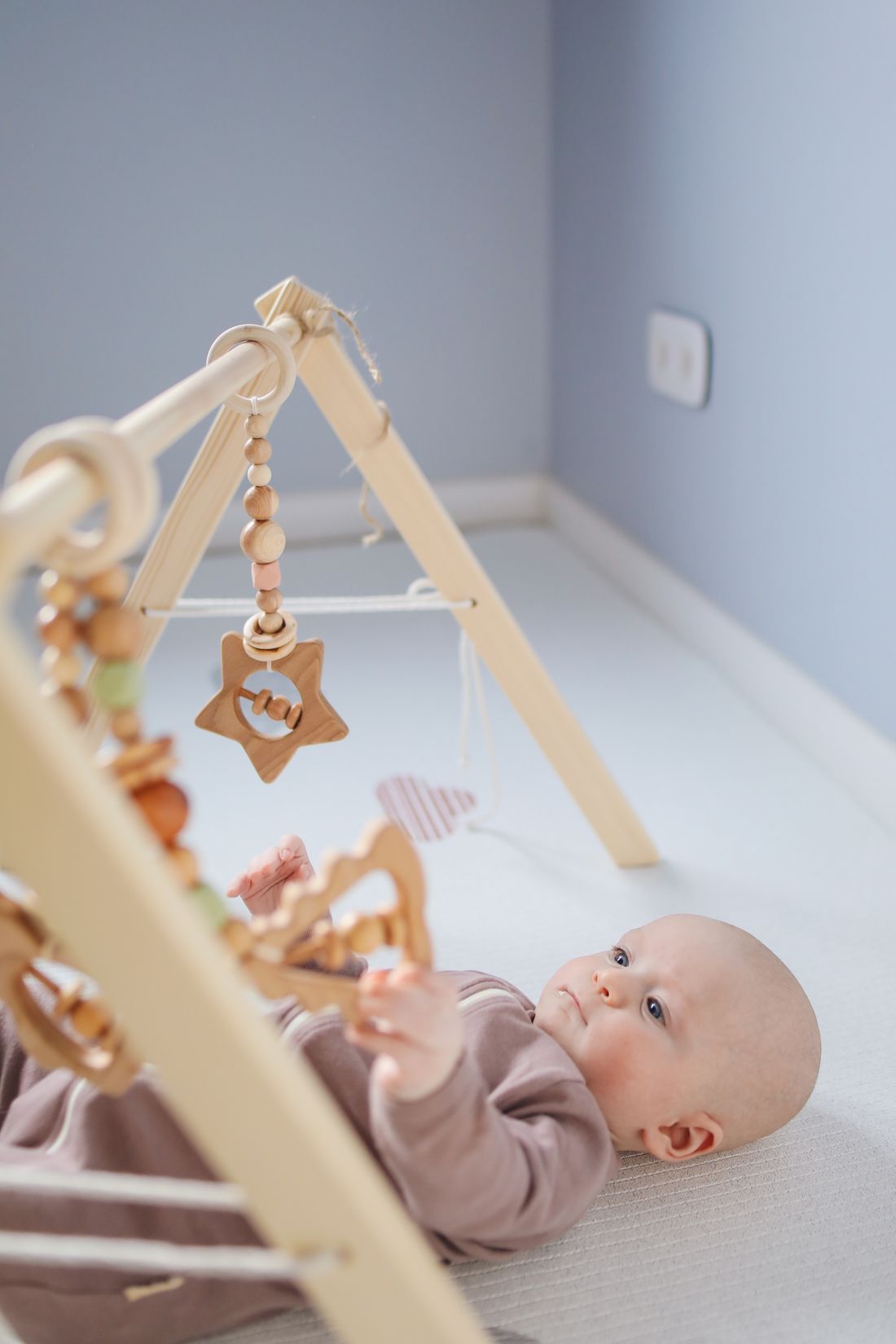
Free movement on a clean firm mat supports rolling, reaching, turning and crawling. Simple household objects such as a clean metal cup, cloth, box or wooden spoon can be explored if too large to choke and free of sharp edges.
By about 9 months many babies sit without support, get into sitting, transfer and rake objects, babble, respond to their name and enjoy peekaboo. Crawling style and timing vary; corrected age matters after premature birth.
The baby cannot hold the head steadily, cannot sit with support near 9 months, uses one side much less, is very stiff or floppy, does not respond to sound or faces, makes few sounds, has feeding-skill difficulty, or loses a skill.
There is a seizure, repeated spasms, sudden unresponsiveness, rapid loss of skills, severe breathing difficulty, blue colour, a serious fall or head injury, suspected shaking, or the baby is difficult to wake.
β What you can do: Clear the floor, separate older children's small toys, join the baby's play and change positions. Avoid screens and long periods in seats.
β Zango Clinic’s view: At 7β9 months, a safe floor and responsive adult teach more than an expensive imported activity centre.
No. Wheeled baby walkers do not teach normal walking and can rapidly reach stairs, hot tea, heaters, wires and medicines. They cause serious falls and burns even when an adult is nearby.
By about 9 months many babies sit without support, get into sitting, transfer and rake objects, babble, respond to their name and enjoy peekaboo. Crawling style and timing vary; corrected age matters after premature birth.
The baby cannot hold the head steadily, cannot sit with support near 9 months, uses one side much less, is very stiff or floppy, does not respond to sound or faces, makes few sounds, has feeding-skill difficulty, or loses a skill.
There is a seizure, repeated spasms, sudden unresponsiveness, rapid loss of skills, severe breathing difficulty, blue colour, a serious fall or head injury, suspected shaking, or the baby is difficult to wake.
β What you can do: Use floor play, a stationary activity centre for brief supervised use, or sturdy furniture later for supported standing. Ask grandparents not to bring a walker.
β Zango Clinic’s view: At 7β9 months, walkers are a common Pakistani gift but a preventable injury risk; free floor movement is the safer developmental choice.
Let the baby transfer large blocks, bang two safe objects, rake soft food, hold a preloaded spoon and pick up large soft finger foods. Fine pincer grasp develops gradually toward the end of the first year.
By about 9 months many babies sit without support, get into sitting, transfer and rake objects, babble, respond to their name and enjoy peekaboo. Crawling style and timing vary; corrected age matters after premature birth.
The baby cannot hold the head steadily, cannot sit with support near 9 months, uses one side much less, is very stiff or floppy, does not respond to sound or faces, makes few sounds, has feeding-skill difficulty, or loses a skill.
There is a seizure, repeated spasms, sudden unresponsiveness, rapid loss of skills, severe breathing difficulty, blue colour, a serious fall or head injury, suspected shaking, or the baby is difficult to wake.
β What you can do: Offer only objects larger than the baby's airway, supervise closely and alternate hands. Remove beads, coins, batteries and prayer-bead pieces.
β Zango Clinic’s view: At 7β9 months, safe self-feeding and simple object play build hand skills; tiny training objects are unnecessary and dangerous.
Talk in the family's natural languages, copy babbles, name daily activities, sing local rhymes, read picture books and play peekaboo. Babies learn from responsive conversation; they do not need English screens to become clever.
By about 9 months many babies sit without support, get into sitting, transfer and rake objects, babble, respond to their name and enjoy peekaboo. Crawling style and timing vary; corrected age matters after premature birth.
The baby cannot hold the head steadily, cannot sit with support near 9 months, uses one side much less, is very stiff or floppy, does not respond to sound or faces, makes few sounds, has feeding-skill difficulty, or loses a skill.
There is a seizure, repeated spasms, sudden unresponsiveness, rapid loss of skills, severe breathing difficulty, blue colour, a serious fall or head injury, suspected shaking, or the baby is difficult to wake.
β What you can do: Pause for the baby to answer with a sound or look, involve grandparents in songs and stories, and keep phones away during meals and play.
β Zango Clinic’s view: At 7β9 months, Urdu, Pashto, Punjabi, Sindhi, Balochi or any loving home language supports the brain; interaction matters, not Western videos.
Yes. A baby may cling to parents, cry with unfamiliar people or protest when a caregiver leaves because memory and attachment are developing. This can vary with temperament and fatigue.
By about 9 months many babies sit without support, get into sitting, transfer and rake objects, babble, respond to their name and enjoy peekaboo. Crawling style and timing vary; corrected age matters after premature birth.
The baby cannot hold the head steadily, cannot sit with support near 9 months, uses one side much less, is very stiff or floppy, does not respond to sound or faces, makes few sounds, has feeding-skill difficulty, or loses a skill.
There is a seizure, repeated spasms, sudden unresponsiveness, rapid loss of skills, severe breathing difficulty, blue colour, a serious fall or head injury, suspected shaking, or the baby is difficult to wake.
β What you can do: Let new people approach slowly, keep a familiar caregiver nearby, play short peekaboo separations and never shame or force the baby into someone's arms.
β Zango Clinic’s view: At 7β9 months, wariness is often healthy attachmentβnot bad manners to relatives; gentle introductions preserve trust.
These answers help you know what to watch for at home. When something does not feel right, or a red-flag sign appears, a quick consultation is the safest next step. Book a clinic visit or ask on WhatsApp.
These answers help you know what to watch for. When something does not feel right, a quick consultation is the safest next step.