Parent Questions Β· Infant Β· 1β3 Months
This is the age of the first real smile, and little conversations of coos soon follow. Your baby studies faces, tracks moving things, and startles at sounds, all signs the senses are wiring up. This guide covers the 2-month milestones, how much tummy time to aim for, simple games worth playing, and the signs that development needs a check.

Pick the worry that fits your baby and open it for a clear answer, with what is usually normal, when to see a doctor, and when to go straight to hospital.
By about 2 months many babies calm when spoken to or picked up, look at faces, smile back, make sounds other than crying, react to loud sounds, watch movement, move both arms and legs and briefly hold the head up on the tummy.
By about 2 months many babies look at faces, calm to a familiar voice, smile socially, make sounds other than crying, react to loud sounds, move both sides and briefly hold the head up during tummy time. Timing varies, especially after premature birth.
The baby does not respond to sound or faces, never smiles by around 3 months, consistently moves one side less, is very stiff or floppy, always turns the head one way, has a worsening flat spot, feeding difficulty or any loss of a skill.
There are repeated rhythmic jerks that do not stop when a limb is held, eye deviation with unresponsiveness, sudden loss of responsiveness, breathing difficulty, blue colour, fever, a bulging fontanelle or a serious injury.
β What you can do: Notice skills during ordinary care and discuss them at the next check. Use corrected age for a baby born prematurely and remember that a 1-month-old may not yet show all 2-month milestones.
β Zango Clinic’s view: At 1β3 months, milestones are guides rather than exams; progress, symmetry and any loss of skill are more important than one exact day.
A social smile often appears around 6β8 weeks, and soft vowel-like sounds may follow. Some babies show these a little earlier or later, especially if born prematurely.
By about 2 months many babies look at faces, calm to a familiar voice, smile socially, make sounds other than crying, react to loud sounds, move both sides and briefly hold the head up during tummy time. Timing varies, especially after premature birth.
The baby does not respond to sound or faces, never smiles by around 3 months, consistently moves one side less, is very stiff or floppy, always turns the head one way, has a worsening flat spot, feeding difficulty or any loss of a skill.
There are repeated rhythmic jerks that do not stop when a limb is held, eye deviation with unresponsiveness, sudden loss of responsiveness, breathing difficulty, blue colour, fever, a bulging fontanelle or a serious injury.
β What you can do: Talk face-to-face, copy the baby's sounds and smile during calm alert periods. Arrange review if there is no social response by around 3 months or if skills disappear.
β Zango Clinic’s view: At 1β3 months, responsive talking is the best stimulation; absence of social engagement by the end of this stage deserves assessment.
Young babies prefer faces and high-contrast patterns, may follow a face or object for a short distance and should react to loud sounds. Eyes can occasionally wander early on, but persistent deviation or no visual response is not expected.
By about 2 months many babies look at faces, calm to a familiar voice, smile socially, make sounds other than crying, react to loud sounds, move both sides and briefly hold the head up during tummy time. Timing varies, especially after premature birth.
The baby does not respond to sound or faces, never smiles by around 3 months, consistently moves one side less, is very stiff or floppy, always turns the head one way, has a worsening flat spot, feeding difficulty or any loss of a skill.
There are repeated rhythmic jerks that do not stop when a limb is held, eye deviation with unresponsiveness, sudden loss of responsiveness, breathing difficulty, blue colour, fever, a bulging fontanelle or a serious injury.
β What you can do: Move slowly within the baby's view, speak from both sides and check that the newborn hearing screen was completed. Do not test hearing with very loud sounds near the ear.
β Zango Clinic’s view: At 1β3 months, brief tracking and sound response are reassuring; persistent squint, white pupil or no response needs prompt review.
Tummy time is only for awake, supervised play. Start with short sessions several times daily and build gradually; by about 7 weeks, a total of roughly 15β30 minutes across the day is a useful target if tolerated.
By about 2 months many babies look at faces, calm to a familiar voice, smile socially, make sounds other than crying, react to loud sounds, move both sides and briefly hold the head up during tummy time. Timing varies, especially after premature birth.
The baby does not respond to sound or faces, never smiles by around 3 months, consistently moves one side less, is very stiff or floppy, always turns the head one way, has a worsening flat spot, feeding difficulty or any loss of a skill.
There are repeated rhythmic jerks that do not stop when a limb is held, eye deviation with unresponsiveness, sudden loss of responsiveness, breathing difficulty, blue colour, fever, a bulging fontanelle or a serious injury.
β What you can do: Try tummy time on the caregiver's chest, lap or a firm floor mat after a wakeful periodβnot immediately after a large feed. Stop if the baby is distressed, sleepy or unattended.
β Zango Clinic’s view: At 1β3 months, frequent short tummy-time sessions strengthen the neck and help prevent a flat head without changing safe-sleep position.
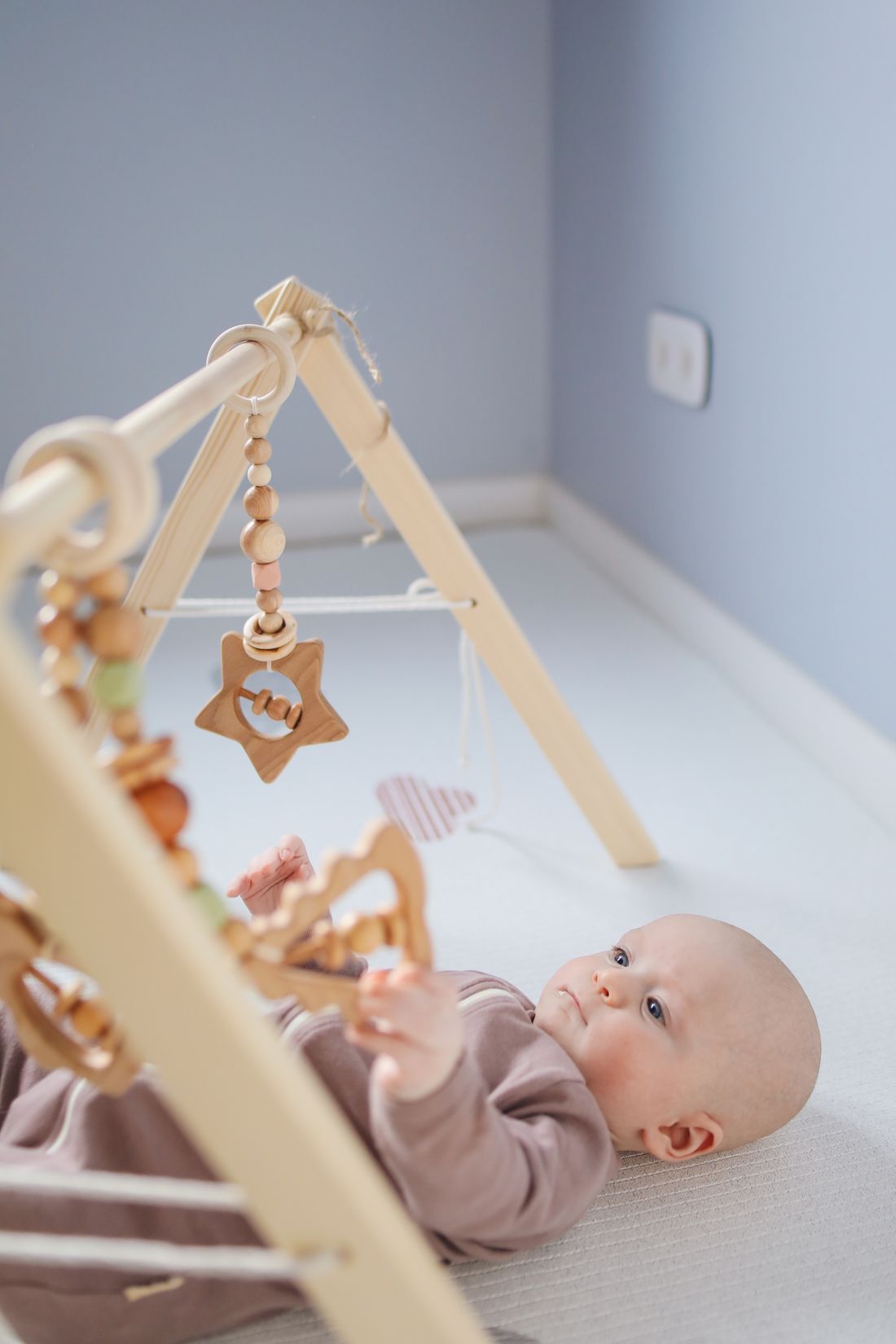
The best play is simple human interaction: eye contact, talking, singing, smiling, gentle touch, high-contrast pictures and slow movement of a safe toy. Babies need breaks when they turn away, yawn or become fussy.
By about 2 months many babies look at faces, calm to a familiar voice, smile socially, make sounds other than crying, react to loud sounds, move both sides and briefly hold the head up during tummy time. Timing varies, especially after premature birth.
The baby does not respond to sound or faces, never smiles by around 3 months, consistently moves one side less, is very stiff or floppy, always turns the head one way, has a worsening flat spot, feeding difficulty or any loss of a skill.
There are repeated rhythmic jerks that do not stop when a limb is held, eye deviation with unresponsiveness, sudden loss of responsiveness, breathing difficulty, blue colour, fever, a bulging fontanelle or a serious injury.
β What you can do: Use a clean floor mat, offer short calm play after feeds have settled and follow the baby's interest. Screen videos and expensive electronic toys are unnecessary.
β Zango Clinic’s view: At 1β3 months, a parent's face and voice provide richer development than screens, flashing toys or constant stimulation.
A strong head preference can lead to positional flattening and may reflect tight neck muscles. Early changes in awake positioning and an examination are useful; pillows and sleep positioners are unsafe.
By about 2 months many babies look at faces, calm to a familiar voice, smile socially, make sounds other than crying, react to loud sounds, move both sides and briefly hold the head up during tummy time. Timing varies, especially after premature birth.
The baby does not respond to sound or faces, never smiles by around 3 months, consistently moves one side less, is very stiff or floppy, always turns the head one way, has a worsening flat spot, feeding difficulty or any loss of a skill.
There are repeated rhythmic jerks that do not stop when a limb is held, eye deviation with unresponsiveness, sudden loss of responsiveness, breathing difficulty, blue colour, fever, a bulging fontanelle or a serious injury.
β What you can do: Alternate the direction of interesting sights, carry the baby on both sides, increase supervised tummy time and ask for a neck and head-shape assessment.
β Zango Clinic’s view: At 1β3 months, early positional treatment often works well; the answer is awake movement and assessment, not placing the baby prone to sleep.
Review is needed if the baby does not react to loud sounds or faces, does not begin smiling by around 3 months, is very stiff or floppy, moves one side less, has persistent abnormal eye movements, feeds poorly or loses a skill already gained.
By about 2 months many babies look at faces, calm to a familiar voice, smile socially, make sounds other than crying, react to loud sounds, move both sides and briefly hold the head up during tummy time. Timing varies, especially after premature birth.
The baby does not respond to sound or faces, never smiles by around 3 months, consistently moves one side less, is very stiff or floppy, always turns the head one way, has a worsening flat spot, feeding difficulty or any loss of a skill.
There are repeated rhythmic jerks that do not stop when a limb is held, eye deviation with unresponsiveness, sudden loss of responsiveness, breathing difficulty, blue colour, fever, a bulging fontanelle or a serious injury.
β What you can do: Write down or record a safe short video of the concern and arrange a developmental and neurological assessment. Use corrected age if premature, but do not delay when skills are lost.
β Zango Clinic’s view: At 1β3 months, asymmetry or loss of ability is more concerning than normal variation in the timing of a single milestone.
These answers help you know what to watch for at home. When something does not feel right, or a red-flag sign appears, a quick consultation is the safest next step. Book a clinic visit or ask on WhatsApp.
These answers help you know what to watch for. When something does not feel right, a quick consultation is the safest next step.